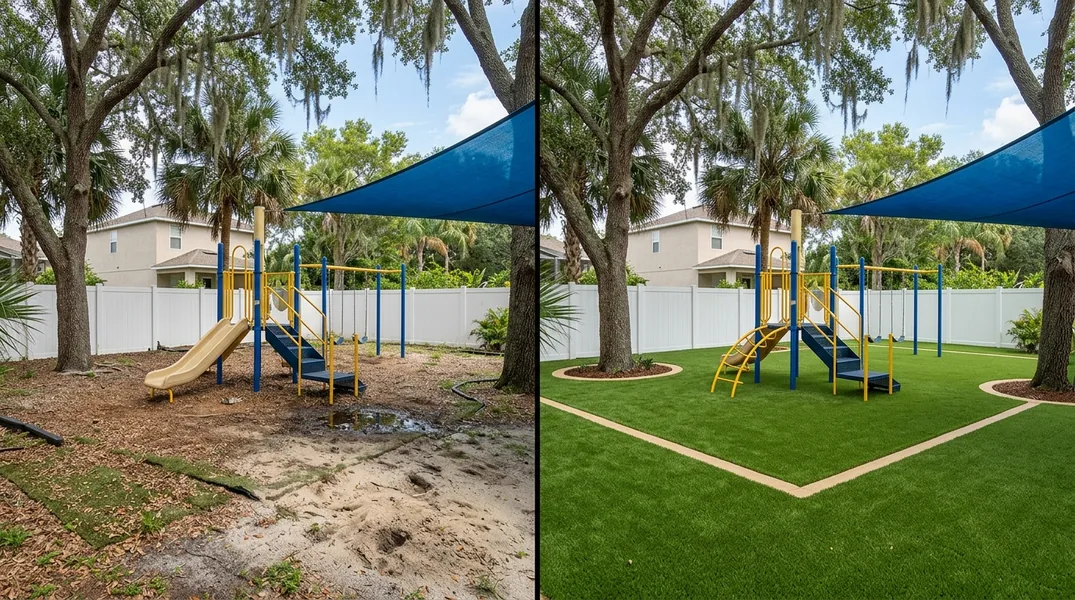
The St. Augustine Problem in Tampa's Climate
If you own a home in Tampa, you've probably noticed that maintaining a lush St. Augustine lawn is harder than it sounds. This warm-season grass thrives in Florida's heat, but it comes with a long list of headaches that many homeowners don't anticipate until they're already committed to the upkeep.
St. Augustine grass is shallow-rooted, which means it requires frequent watering during dry spells and demands consistent fertilization to stay green. In Tampa's subtropical climate, where summer temperatures regularly exceed 90 degrees and humidity levels spike, this grass can quickly become stressed. The problem worsens during Florida's dry season, when natural rainfall drops significantly and irrigation becomes essential just to keep the lawn from browning out entirely.
Beyond water demands, St. Augustine is notoriously susceptible to disease and pest pressure. Fungal issues like take-all root rot and gray leaf spot thrive in the warm, humid conditions that define our region. If you've ever dealt with these problems, you know they're expensive to treat and difficult to eliminate completely. This is where the real frustration sets in for many homeowners who simply want a green yard without becoming a part-time turf scientist.
Chinch Bugs: The Silent Destroyer of Tampa Lawns
One of the most destructive pests affecting St. Augustine grass in Florida is the chinch bug. These tiny insects feed on grass blades and inject toxins that cause yellowing, wilting, and eventual death of large patches of turf. What makes chinch bugs particularly problematic in Tampa is that they thrive during the hot, dry months when homeowners are already stressed about watering. A chinch bug infestation can turn a healthy lawn into a patchy nightmare in just a few weeks.
Detecting a chinch bug problem early is challenging because the damage often looks similar to drought stress or disease. By the time many homeowners realize what's happening, the infestation has spread significantly. Treatment typically involves pesticide applications, which can be costly and may require multiple applications throughout the season. Even worse, repeated pesticide use can harm beneficial insects and contribute to resistance, making future infestations harder to control.
This is where artificial grass offers a compelling alternative. Synthetic turf eliminates the food source that chinch bugs depend on, making pest infestations a non-issue. You won't need to worry about monitoring for signs of damage or scheduling expensive pest control treatments. For homeowners tired of the chinch bug battle, Residential Artificial Grass Installation provides permanent peace of mind.
Shade Challenges: Why Your St. Augustine Struggles Under Trees
St. Augustine grass is moderately shade-tolerant compared to other warm-season grasses, but it still needs at least four to six hours of direct sunlight daily to maintain health and density. In Tampa, where many properties feature mature oak trees, pine trees, and other native vegetation, shaded areas are common. These spots often become thin, weak, and prone to moss growth, creating an uneven appearance across your entire lawn.
The challenge intensifies when you consider that shaded areas also tend to retain moisture longer, creating ideal conditions for fungal diseases. St. Augustine in shade becomes a cycle of poor growth, disease pressure, and the need for corrective treatments. Many homeowners resort to trimming tree branches to increase light penetration, but this approach has limits and can compromise the aesthetic appeal of mature trees on the property.
Artificial grass thrives in both sun and shade, making it an ideal solution for properties with mixed light conditions. Modern synthetic turf maintains its color, texture, and durability regardless of sunlight exposure. This uniformity means you can achieve a consistently attractive lawn across your entire yard, even in heavily shaded areas where natural grass simply won't cooperate.
Artificial Grass vs. Real Grass: A Practical Comparison for Tampa Homeowners
When comparing artificial grass versus real grass, the decision often comes down to lifestyle, budget, and long-term goals. Real St. Augustine grass has undeniable appeal. It feels natural underfoot, supports local wildlife, and provides environmental benefits through oxygen production and carbon sequestration. For homeowners who value these qualities and have the time and resources to maintain a high-quality lawn, natural grass remains a valid choice.
However, artificial grass delivers tangible advantages that resonate with busy homeowners and those prioritizing sustainability through water conservation. Modern synthetic turf looks remarkably realistic, with varied blade colors and textures that closely mimic natural grass. Installation of Residential Artificial Grass Installation eliminates the need for weekly mowing, regular fertilization, pest control treatments, and constant watering. For Tampa residents managing multiple properties or dealing with physical limitations that make yard work challenging, artificial grass removes a significant burden.
The durability of quality artificial grass is another major advantage. Premium synthetic turf can last 15 to 20 years with minimal maintenance, far exceeding the lifespan of a consistently healthy natural lawn. You won't face the expense of re-sodding damaged areas or dealing with seasonal dormancy. The investment upfront is offset by years of reduced maintenance costs and water savings.
Xeriscaping and Drought-Tolerant Landscaping: Beyond the Turf Debate
For homeowners genuinely committed to sustainability and water conservation, the broader conversation extends beyond turf choice to encompass xeriscaping and drought-tolerant landscaping principles. Xeriscaping involves designing landscapes that minimize water consumption through strategic plant selection, efficient irrigation, and thoughtful layout. This approach is particularly relevant in Florida, where water conservation has become increasingly important despite our reputation for rainfall.
Artificial grass fits naturally into xeriscaping strategies because it eliminates irrigation requirements entirely while maintaining the aesthetic of a traditional lawn. When combined with native plants, mulch beds, and hardscape elements, synthetic turf creates a low-water landscape that remains attractive year-round. This combination approach appeals to environmentally conscious homeowners who want to reduce their water footprint without sacrificing curb appeal.
Drought-tolerant landscaping doesn't mean sacrificing beauty or functionality. Native Florida plants like coontie, muhly grass, and blanket flower provide color and texture while requiring minimal supplemental water once established. Pairing these elements with artificial grass in high-traffic areas creates a balanced landscape that's both sustainable and practical. If you're interested in exploring how artificial turf fits into a comprehensive landscape redesign, contact Tampa Turf Installation at (786) 461-1575 to discuss your vision.
Making Your Decision: When to Choose Artificial Turf in Tampa
The decision to switch from St. Augustine grass to artificial turf ultimately depends on your priorities and circumstances. If you're spending significant time and money battling chinch bugs, managing shaded areas, or watering during dry seasons, artificial grass likely makes financial and practical sense. Homeowners with busy schedules, those with mobility challenges, or anyone prioritizing water conservation should seriously consider the switch.
Before making a final decision, evaluate your specific property conditions. Do you have extensive shade? Are chinch bugs a recurring problem? How much time are you currently spending on lawn maintenance? What's your water usage and associated costs? Answering these questions honestly will clarify whether artificial grass aligns with your needs and values.
If you're ready to explore artificial turf options for your Tampa home, Tampa Turf Installation offers professional assessment and installation services. We understand the unique challenges that local homeowners face with natural grass and can recommend solutions tailored to your property. Whether you're interested in Residential Artificial Grass Installation, Pet Turf & Dog Run Installation, or exploring drought-tolerant landscaping options, we're here to help. Reach out for a free estimate today, or call (786) 461-1575 to discuss your project with our team.
Looking for a professional artificial grass installation company in Tampa? Tampa Turf Installation responds fast for all your artificial grass installation needs.
Get a Free Quote